
Built different.
Taught better.
There’s a gap in veterinary ultrasound education.
We’re here to close it.
Built different.
Taught better.
There’s a gap in veterinary ultrasound education.
We’re here to close it.
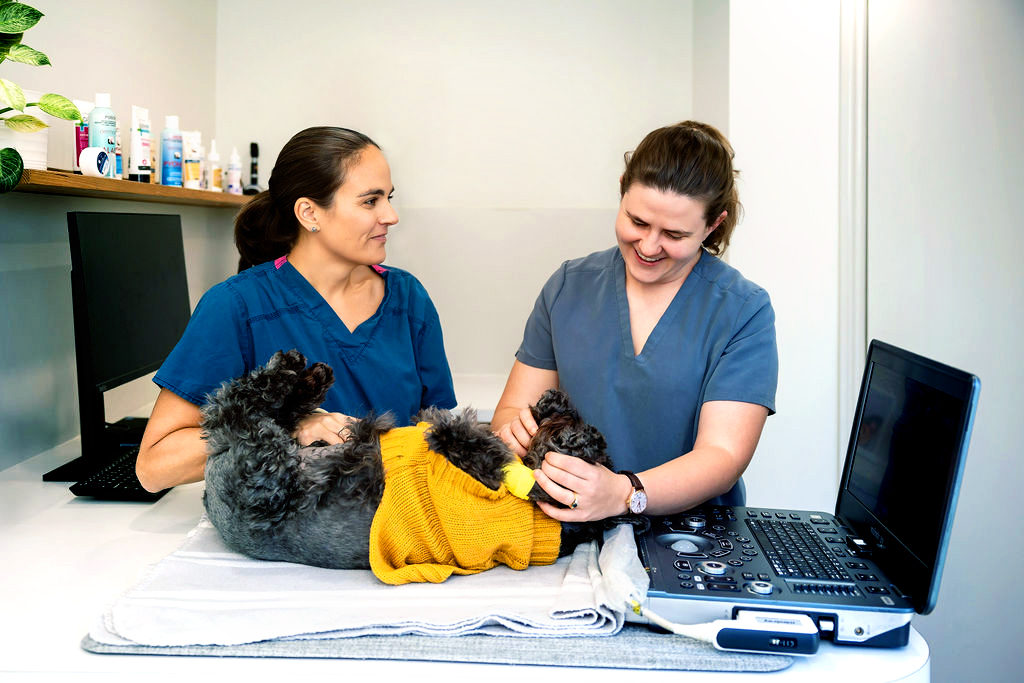
Most vets leave university knowing ultrasound exists.
Very few leave knowing how to use it.
The theory gets covered. The practical side (the kind of learning that only happens when someone is in the room with you, guiding you through what you’re seeing in real time) often gets deferred.
The profession has a habit of promising that support will come later: a mentor, perhaps, or a weekend course. However, later doesn’t always arrive.
So vets figure it out as they go, building workarounds for the gaps and carrying a low level of uncertainty into every scan they perform.
That is the problem eVet Academy exists to solve.
Veterinary ultrasound training should be practical, clinically-grounded and built around how GP vets work. It should meet vets where they are: at the beginning, mid-career or anywhere in between.
And it should feel like a knowledgeable colleague standing next to you in the room, not a textbook written by someone who forgot what it felt like to be a vet on a busy afternoon.
How we teach
Everything we teach at eVet Academy comes back to one idea: that veterinary ultrasound basics and clinical skills are best learned through clear, practical, medicine-led instruction.
In practice, that looks like this:
No jargon, ever.
If you need a medical dictionary to follow the explanation, the explanation has failed. Our guides, masterclasses and resources are written to make sense on the first read.
Medicine first, technique second.
Ultrasound is a clinical tool. Teaching it in isolation from the medicine it supports produces vets who can operate a probe but still feel uncertain when a patient needs an answer. eVet Academy keeps the clinical picture central.
Practical over perfect.
The goal is to help you perform a confident, systematic veterinary ultrasound examination in general practice. The goal isn’t for you to pass a radiology exam.
Straight talk, genuine support.
Vets who struggle with small animal ultrasound are undertrained, not incapable. That distinction matters and it shapes the tone of everything here. You will be challenged. You will not be talked down to. You will be supported.
Built to grow with you.
Resources, masterclasses and the eVet community are designed to serve you at every stage in your ultrasound journey, from your first scan to years of confident, consistent practice.
What we stand for:
Confidence is built, not given.
Ultrasound rewards the vets who show up, put in the reps and give themselves permission to be uncertain before they become certain. eVet Academy supports that process at every stage.
Struggling with ultrasound is a systemic problem, not a personal failing.
Every vet who has felt underprepared scanning in-house has felt that way for a reason. We take that seriously.
General practice deserves better resources.
GP vets carry a heavy clinical load with limited backup. The tools they use should be as good as the decisions they are being asked to make.
The training doesn't stop here.
Guides, masterclasses, community, everything eVet Academy builds is designed to keep vets learning, improving and feeling supported long after the first guide.
It started with a gap and a very stubborn vet;
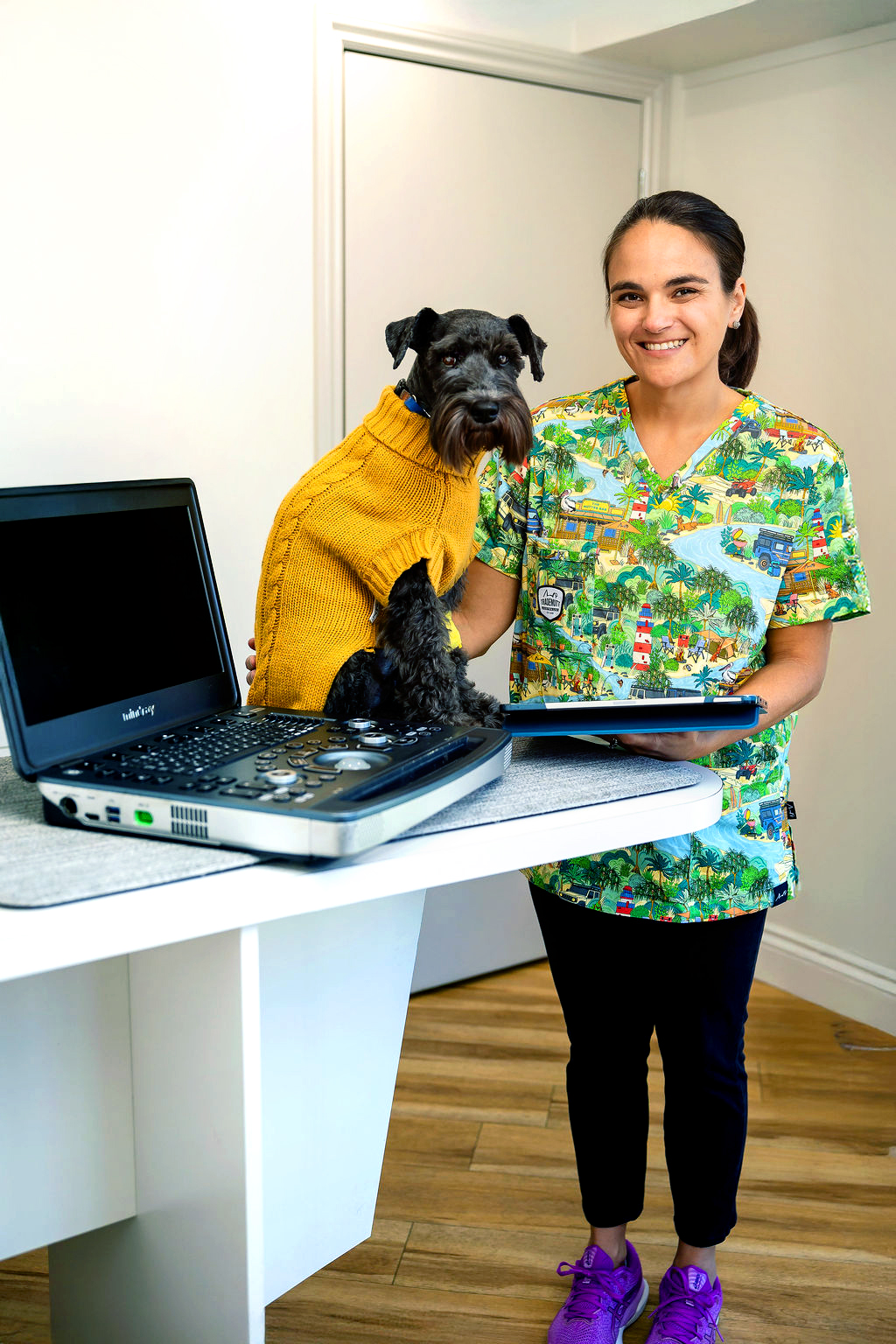
meet Belinda Carey

Belinda applied to vet school five times. True story.
The long way round
In between applications she picked up a teaching degree, an ecology degree, taught in primary school classrooms and travelled extensively. She also developed the kind of stubbornness that only comes from being told no repeatedly and deciding not to listen.
The fifth application worked.
She graduated with first-class honours, was Dux of fourth year and went straight into an internal medicine internship that was supposed to last twelve months and ran to twenty. She was then offered a specialist residency position in internal medicine.
She passed her MANZCVS in Small Animal Internal Medicine and looked set to stay in that world indefinitely.
The turning point
Then she shattered her patella. Surgery, recovery and a period of enforced stillness turned out to be a rather clarifying experience. She realised she didn’t want the specialist life anymore.
So she resigned, refinanced her mortgage, bought an endoscope and an ultrasound machine and started Brisbane’s first mobile endoscopy and ultrasound company. For years she went clinic to clinic across general practice, doing the scans that busy GP vets needed and couldn’t always perform themselves.
The gap she couldn’t ignore
What she kept finding in those clinics was the same thing, over and over. Vets who were smart, dedicated and genuinely good at their jobs. Vets who were also struggling with ultrasound. They weren’t incapable, but the hands-on small animal ultrasound training they needed had never been provided.
She’d seen the gap up close. She had a teaching degree she’d never fully used. She spent years working under the same pressures her audience faced every day; long hours, complex cases, high stakes and never enough time.
And she had a very clear idea of what a useful guide should look and feel like.
So she wrote one
A step-by-step guide to normal abdominal ultrasound findings was the beginning of eVet Academy. The teaching degree that once felt like a detour turned out to be foundational, because good training has less to do with how much the teacher knows and everything to do with how clearly they can explain it.
Belinda is not a specialist radiologist and that shapes how she teaches. The skills that matter most in general practice are practical, medicine-led and focused on the decisions that need to be made in the clinic. That is what eVet Academy delivers.
What vets are saying
Just wanted to let you know I found an adrenal today using your guide. I was very chuffed with myself.
Hi! I am a (still learning) vet ultrasonographist and I have to tell you, your content is pure gold!! I love how accurate the photos are and how well you describe what you see with the ultrasound machine. I’m happy I found your page, been following for a while now and the content is exceptional!
Ready to get started?
The resource hub is the best place to begin. Practical veterinary ultrasound training for small animal vets, written like an experienced colleague is standing next to you in the room.
Less second-guessing your scans means more time for other things. Like eating lunch. Or sitting down.