
Know what you’re looking at every time you scan
The foundational veterinary ultrasound guide for small animal vets
Most vets learn ultrasound the hard way. A brief introduction at university, a weekend course if they’re lucky and then years of scanning alone, second-guessing findings and working around the gaps in their training.
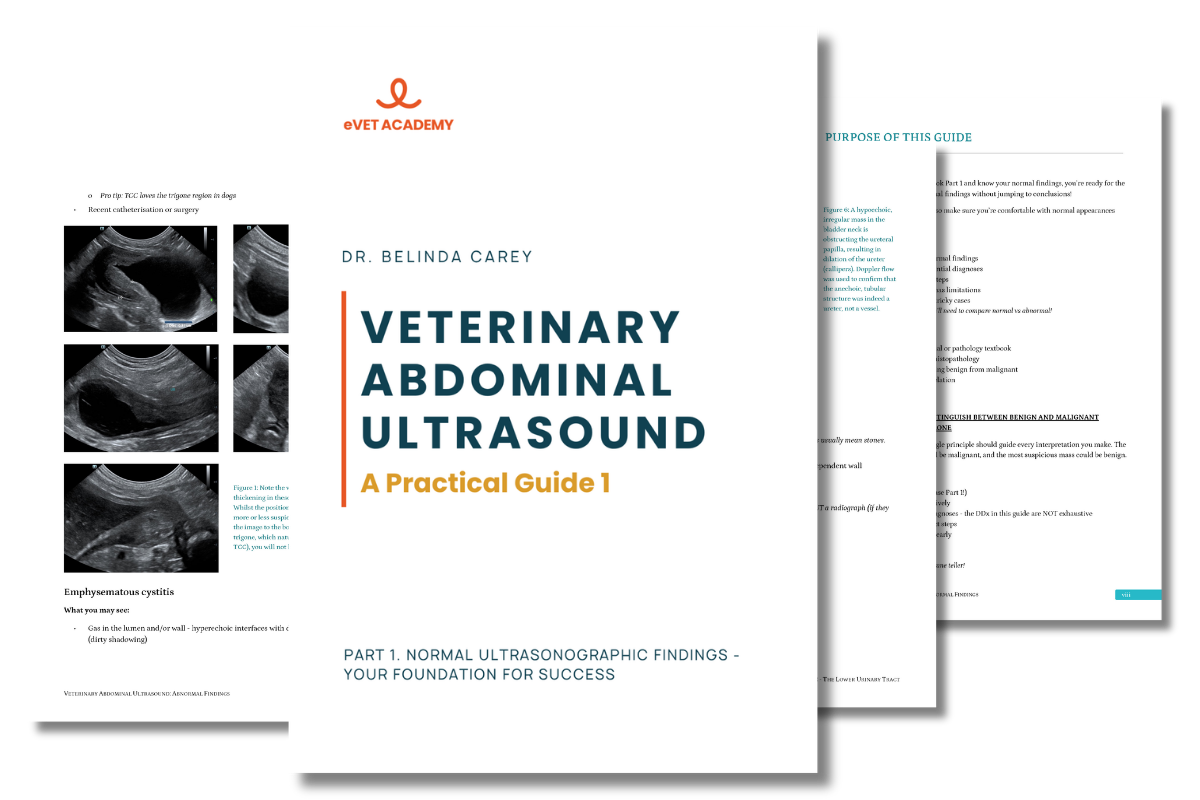
Guide 1 exists because that’s not good enough. It’s a veterinary ultrasound guide for beginners and the foundation every experienced vet needs: 96 pages of practical, image-rich guidance covering normal abdominal findings, organ by organ and step by step.
$52 USD
3,350 vets trained across 97 countries
Instant download to any device, start today
96 pages of normal canine and feline ultrasound
3,350 vets trained across 97 countries
Instant download to any device, start today
96 pages of normal canine and feline ultrasound
Sound familiar?
You’re mid-consult. Probe in hand. The image is up and you’re scanning, but a voice is asking if what you’re seeing is normal or if you’re missing something.
Most vets know that feeling. What they don’t always realise is what it costs.
It costs time. Every scan takes longer when you're second-guessing.
It costs confidence. The uncertainty compounds with every case you're unsure about.
And occasionally, it costs a diagnosis that should have been made.
But that’s not on you. It’s on a system that taught you the theory and left the practical side to chance. Guide 1 gives you what vet school didn’t.
By the end of Guide 1, you’ll be able to:
- Perform a systematic, repeatable abdominal ultrasound examination from start to finish, covering every major organ
- Identify normal appearances of the liver, spleen, kidneys, bladder, adrenal glands, pancreas and gastrointestinal tract in dogs and cats
- Recognise normal variants (the findings that look unusual but aren’t), so you don’t spend time analysing non-issues
- Position your probe correctly for each organ, know exactly what you should be seeing and move on
- Measure key structures accurately and know immediately what falls within normal range and what warrants further investigation
- Perform ultrasound-guided cystocentesis using the included bonus guide with troubleshooting tips
What’s inside:
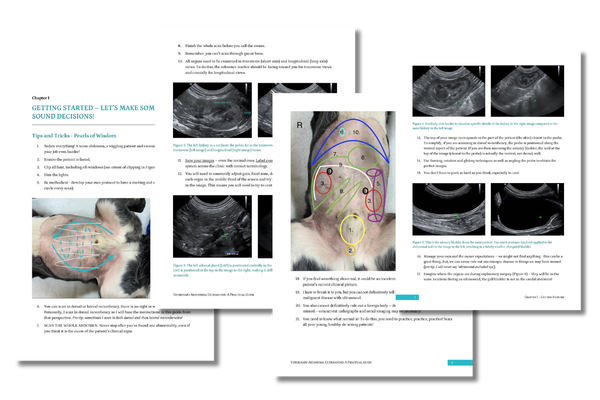
96 pages of normal canine and feline abdominal ultrasound findings
With enough depth to cover most clinical scenarios you’ll encounter in general practice.
100+ images of normal ultrasound appearances including variations of normal.
Compare directly against your own scans so you know whether what you’re seeing is within range or worth investigating.
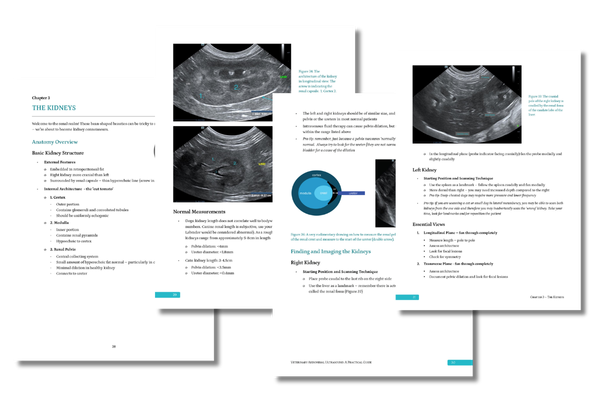
Step-by-step organ-by-organ guidance across the liver, spleen, kidneys, bladder, adrenal glands, pancreas and gastrointestinal tract.
Every major structure covered in the same logical sequence you’ll use in clinic.
Pro tips and clinical pearls from a real veterinary ultrasonographer.
The kind of practical knowledge that comes from performing hands-on small animal ultrasound in thousands of real clinic settings.
Clickable table of contents.
Jump straight to the organ or section you need mid-scan without scrolling through the whole guide to find it.
Instant digital download to any device.
Yours to keep, yours to return to and accessible from your phone, tablet or laptop the moment you need it.
Bonus: five-page ultrasound-guided cystocentesis guide.
Step-by-step technique and troubleshooting tips for one of the most commonly performed ultrasound-guided procedures in general practice.
What changes after Guide 1
You have a baseline.
You know exactly what the liver, spleen, kidneys, bladder, adrenal glands, pancreas and gastrointestinal tract should look like on screen. When something looks different, you’ll notice it.
You have a protocol.
A consistent, repeatable vet ultrasound protocol so you cover the same ground in the same order every time. You won’t finish another scan wondering if you missed an organ. And you won’t scan differently depending on how busy the day is.
You have a reference.
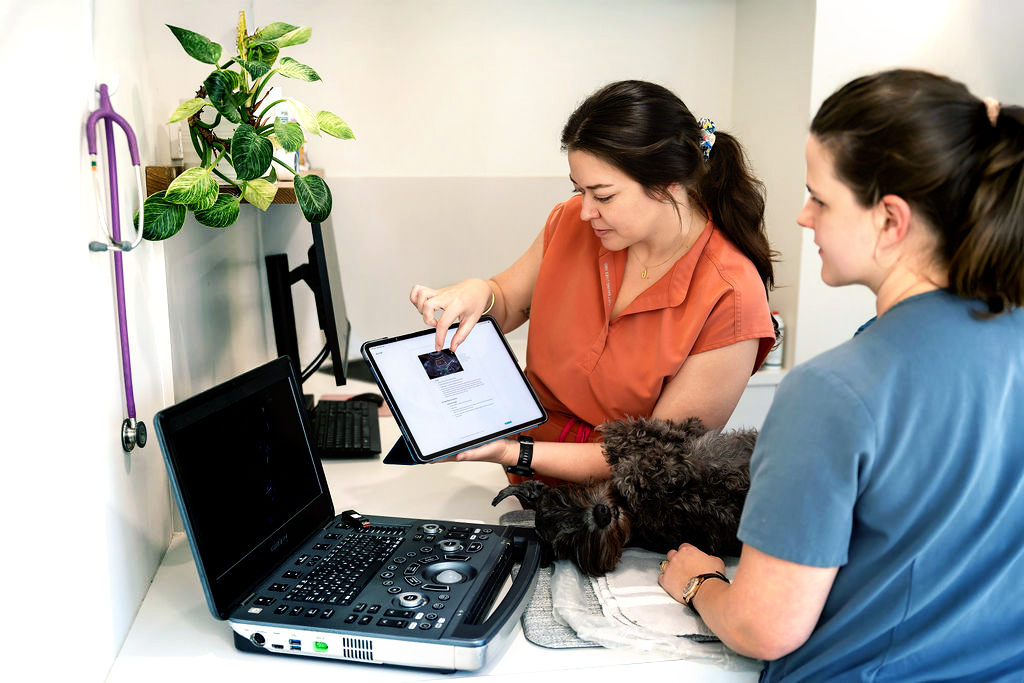
The guide lives on your device, by your machine, open mid-scan whenever you need it. You can return to it whenever a finding makes you pause.
You have confidence.
Because you know what you’re looking at. You’ll confidently present findings to clients and discuss cases with colleagues. And at the end of the day, you can leave work at work.
From vets who were exactly where you are
This guide has already been the perfect tool for me as a GP vet. Not only does it provide great examples of baseline appearances and measurements of normal, it also has step-by-step guides on how to find all the essential organs – even the pancreas! 11/10 recommend, the perfect get started guide and a great long term investment for anyone who loves to (or wants to love to) scan!
The perfect complement to general practice ultrasound scanning, at any level. Easy to follow with lots of images. I wish I had this sooner.
Amazing resources. So helpful in the clinic.
Is this guide right for you?
New to ultrasound?
Start here. Guide 1 builds the foundation everything else sits on. It gives you a clear, systematic approach to normal findings with no prior experience required.
Been scanning for years?
Guide 1 fills the gaps you didn’t know were there. A consistent protocol and a reliable visual reference changes how you scan, even after a decade of doing it.
Vet student, vet nurse or practice manager?
If you’re involved in ultrasound in any capacity (performing it, assisting with it or wanting to understand what you’re looking at) this guide is relevant.
Your next scan could look very different
The vets who get good at hands-on small animal ultrasound are the ones who show up consistently, put the reps in and stop waiting until they feel ready.
Readiness follows action.
You already care enough to be here. The rest is just showing up.
$52 USD
Trusted by 3,350 vets across 97 countries.
Instant digital download.
Trusted by 3,350 vets across 97 countries.
Instant digital download.
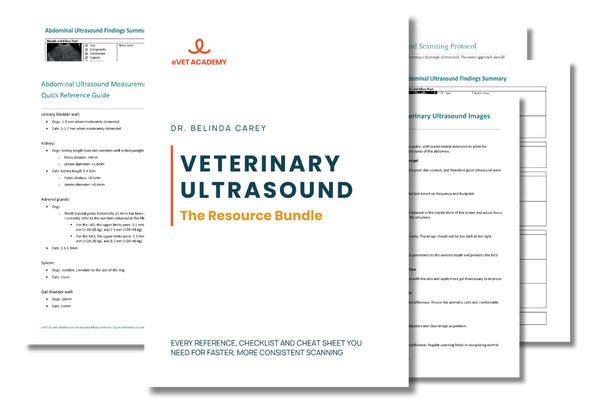
Want to scan smarter from day one?
The eVet Resource Bundle gives you twelve practical reference tools for $22 USD with image quality tips, a scanning protocol, measurement references, a findings summary, a client handout and more.
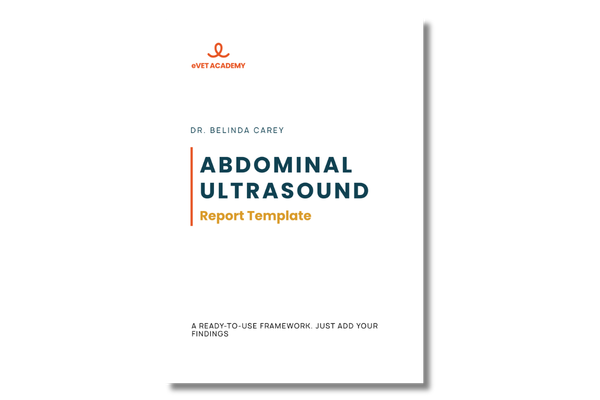
Want to save time on reporting?
Our Ultrasound Reporting Template is a pre-structured veterinary abdominal ultrasound report covering every major organ system, plus two fully completed example reports with accompanying images showing how to describe findings and frame recommendations.
Questions you might be asking
How do I receive my guide?
As soon as your purchase is confirmed, you’ll receive an email receipt with your download link. The guide is a PDF that you can save to your phone, tablet or laptop, and it’s yours to access whenever you need it. Most vets keep it open on a device by their ultrasound machine.
What format is the guide in?
The guide is a PDF. It opens on any device. If you can open an email attachment, you can open this guide.
What currency is the price in?
All prices are in USD. Your bank or payment provider will handle the conversion automatically at checkout.
What is the difference between Guide 1 and Guide 2?
Guide 1 covers normal abdominal ultrasound findings. It’s the foundation you need so you can confidently interpret images.
Guide 2 covers abnormal findings and takes you into interpretation and clinical decision-making across the key organs: gastrointestinal wall layering, adrenal glands, pancreas, splenic masses and more. They are designed to work together.
I have been scanning for years. Is Guide 1 still relevant for me?
Yes, and this is probably the question we get most often. The vets who find Guide 1 most useful are often the experienced ones. Most come away having confirmed what they know in some areas and filled gaps they hadn’t realised were there in others.
I am based outside Australia. Will this guide work for me?
Yes. Guide 1 is used by vets in 97 countries. The anatomy does not change across borders, and the guide covers both canine and feline normal findings.
Can I share the guide with my colleagues or clinic?
The guide is licensed for individual use. If your clinic wants access for multiple team members, get in touch.
Is this guide suitable for vet students and vet nurses?
Absolutely. Guide 1 is used across the full spectrum of veterinary roles. If you are involved in ultrasound in any capacity or want to understand what you are looking at, this guide is relevant.